Brand = VPA × (1+r)^t: A Formula for Compounding Brand Equity
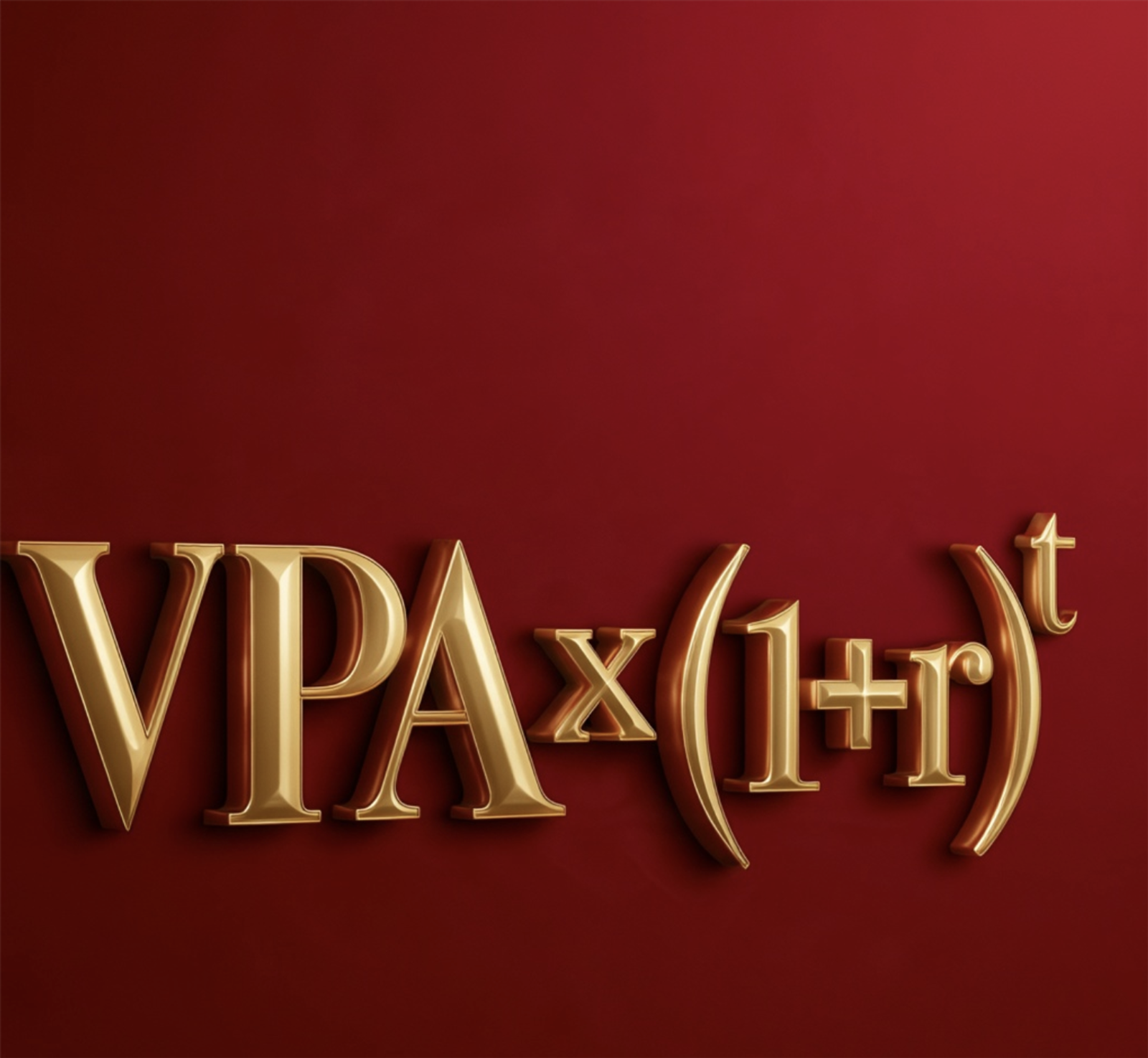
JCW translates brand value into measurable math: VPA × (1+r)^t. Not metaphor—operational logic.
Most brands treat marketing as expense: how much ad spend this quarter, how many campaigns to run, which influencer to hire. Every dollar disappears after the spend, and no one asks: what remains after this campaign ends? Does it still work three months from now? This is why many brands run marketing for five, ten years yet remain fuzzy in consumer memory and can't command premium pricing—their money keeps burning, never capitalizing.
JCW's brand compounding formula Brand = VPA × (1+r)^t turns the vague work of 'brand building' into measurable, manageable logic. It's not a marketing slogan—it's the operating system JCW actually uses when allocating brand budgets. When you treat brand as asset rather than expense, everything flips: budget allocation, org decisions, and how you measure success.
VPA: Brand Equity is Not One Number—It's the Product of Three Dimensions
VPA breaks into three independent yet interdependent dimensions. V is Value—what solution or promise the brand represents in consumers' minds. P is Perception—how many people recognize this value, and how clearly. A is Activation—when need arises, can this brand get triggered and chosen first. All three are required, and they multiply—not add.
Why multiplication? Because if any one goes to zero, total brand equity becomes zero. Crystal-clear positioning with no awareness = V × 0. High awareness but no recall of when to choose you = P × 0. Heavy messaging with no unique value = 0 × A. Most brands invest in only one dimension—pouring budget into reach (lifting P) without clarifying V first, or refining product positioning (high V) without doing the work to get it recognized.
VPA is your brand's net asset value. It's not a byproduct of marketing spend—it's the direct target your spend should accumulate toward.
r: The Compounding Rate of Every Marketing Action Determines Growth Speed
r is the compounding rate—the reinvestment rate of each marketing action into VPA. Spend $100K on ads: Brand A buys one-off exposure (r near zero), traffic drops to zero post-campaign. Brand B simultaneously builds email list, SEO content, branded search volume, retargeting pool (r might hit 30%, 50%). One year later, the gap between A and B isn't linear—it's exponential. Because r is a compounding rate, each cycle amplifies on top of the last.
What determines r isn't budget size—it's execution design. Same ad spend: did you drive traffic to owned assets? Same event: did you generate reusable content? Same influencer collab: did it deposit into a brand asset library? These 'post-campaign' steps are often treated as extra work, but they're precisely what turns one-off actions into long-term assets and gives brands a compounding curve.
JCW's working criterion: every marketing dollar spent should leave behind at least three layers—immediate results (short-term conversion), reusable assets (content, materials, lists), and brand equity (search volume, awareness, mental associations). Only when all three layers exist does r truly activate.
t: Time is the Only Variable You Cannot Buy
t is time, and the most brutal variable in this formula. In compounding, t is an exponent, not a multiplier—meaning the longer the duration, the more dramatic the gap. Two brands both with r=20%: after one year, 20% difference; after three years, 73%; after five years, 149%; after ten years, 519%. This isn't marketing talk. This is math.
Yet most brand decision-making works anti-t: every new CMO means repositioning from scratch, every new campaign throws out past strategy, every budget review kills long-term projects. It looks like 'optimization' but actually keeps resetting t to zero. A brand with t=10 that restarts every year equals ten cycles of t=1—compounding effect vanishes entirely.
Money can be doubled, headcount increased, tech bought. Time alone cannot be purchased. Protecting t is the most critical and most underestimated strategic decision a brand leader makes.
Real Use of the Formula: Reallocating Budget and Redefining Success Metrics
Apply Brand = VPA × (1+r)^t to actual budget decisions, and many seemingly rational expenditures get questioned immediately. High short-term ROAS but r=0 campaigns are essentially burning principal. Content investments that seem inefficient may be the key to growth curves because both r and t are high. Budget rightness can't be judged by current-period statements alone—you must look at cumulative contribution across VPA, r, and t.
Measurement also flips. Traditional KPIs measure single-period numbers (CTR, CVR, ROAS), but these only reflect one-moment efficiency—they don't show whether VPA is accumulating, r is rising, or t is protected. North Star metrics JCW uses with brands are typically branded search volume, organic traffic curves, repeat visit rate, brand-to-category association share—these are the external signals of VPA × (1+r)^t manifesting over time, far better indicators of true brand asset health than one-campaign reports.
The Choice Behind the Formula: Which Kind of Brand Will You Be
Brand = VPA × (1+r)^t isn't just math—it's a choice. It asks leaders: will you treat brand as 'marketing expense' or 'asset investment'? Chase current-period ROAS or ten-year compounding? Restart every time or let last cycle become the foundation for the next? These choices have no right or wrong answer, but they determine whether your brand in ten years is an inflation-eaten consumable or a long-term asset with pricing power, customer loyalty, and market memory.
JCW turns this formula into a measurable, executable operating system—not because it sounds good, but because it shifts brand management from 'relying on feel' to 'relying on math.' You can see VPA's current position, calculate whether r is high or low, and protect t from internal organizational erosion. When brand leaders start using this formula to communicate, every marketing dollar, every org decision, every positioning adjustment finally lands on the same compounding curve.